
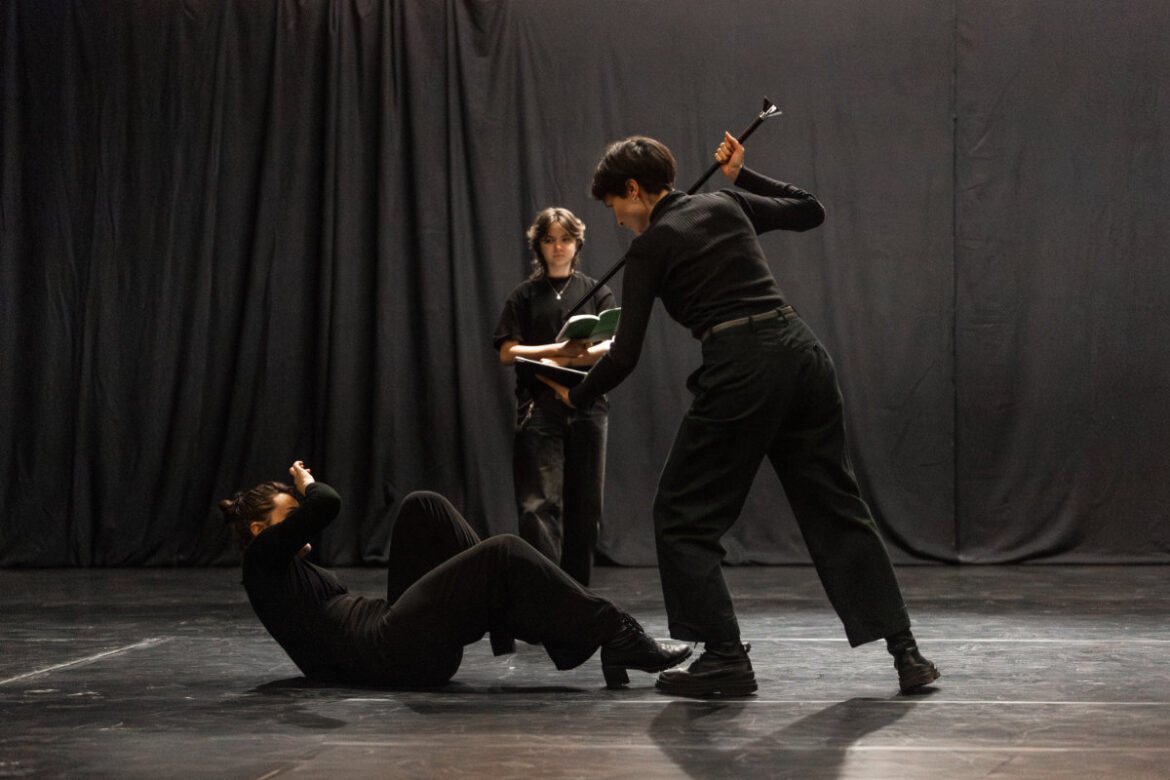
Miriam Barbi, Vera Kittner, and Stefan Wallner interviewed by Michel Büch
In the lead-up to our new production of Dr. Jekyll and Mr. Hyde, we sat down with director Miriam and directing assistants Vera and Stefan to discuss their creative process. From childhood fears to Victorian aesthetics, from multiple Hydes to an original score, they share insights into the choices shaping this imaginative adaptation.
Miriam, you came to the University Players with a specific interest in staging Jeffrey Hatcher’s Dr. Jekyll and Mr. Hyde. How did you encounter the play in the first place, and what sparked your interest?
Miriam I have been wanting to stage Jekyll and Hyde forever. It may sound silly, but I keep returning to the stories that frightened me as a child—and this was definitely one of them. I can vividly recall someone recounting the novella to me when I was still a child, and I was scared for days. It shattered my worldview as it made me realize that someone I perceived as being honest and loveable at one moment might be capable of acting violently and cruelly in the next one. As a teenager, I read the novella myself but that original uncanny feeling, the unsettling idea that you can never see into someone’s mind, however well you know them, has never left me.
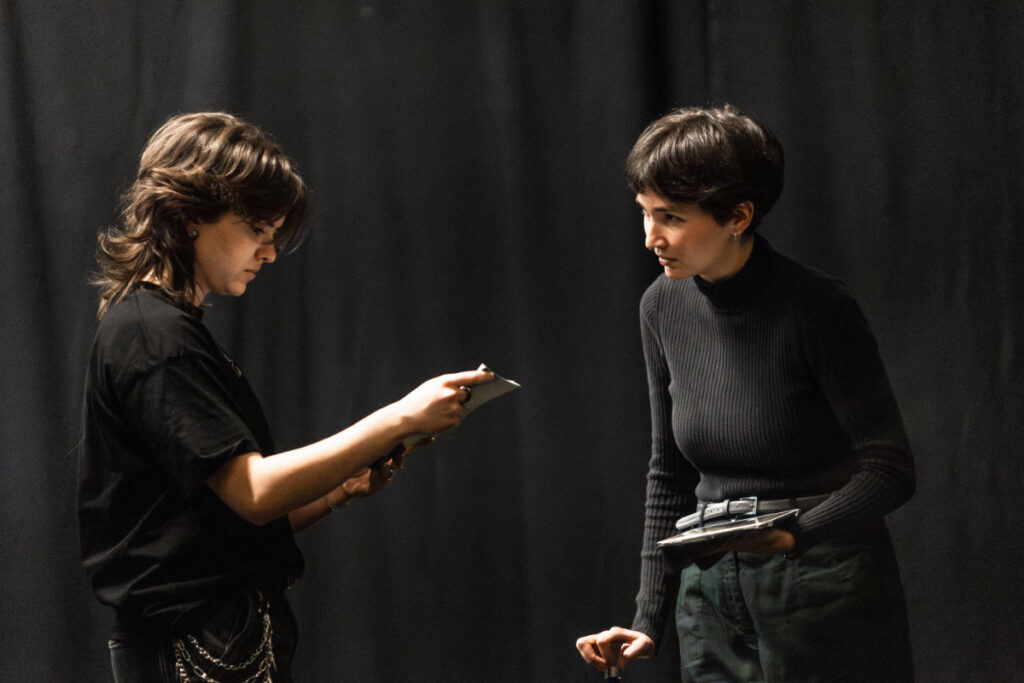
I read a lot of different stage adaptations and Hatcher’s version immediately stuck with me. Firstly, due to its incredibly dynamic, nuanced writing and, secondly, because it captured what I always, though unknowingly, had been searching for: the uncanny nature of Dr. Jekyll himself. The real horror for me had always been that Hyde already existed within Jekyll—and Hatcher’s version speaks to that.
The real horror for me had always been that Hyde already existed within Jekyll.
Miriam Barbi
At the time of this conversation, you have been rehearsing for roughly two months. What have you discovered in the play that you hadn’t seen on the page?
Vera Definitely the portrayal of the characters. Every actor has their own unique style, and the staging depends on the director—so that’s something you can’t read in a script.
Stefan I didn’t realize how hilarious it was when I read the play. Of course, it’s not a full-blown comedy, but there are parts with dry and brutal humour.
Miriam For me it’s the full potential of having the entire cast play Hyde at different points. I was intrigued by the idea when I read how the script treats Hyde, not just as one character, but as a sort of universal force that can manifest in anyone at any time.
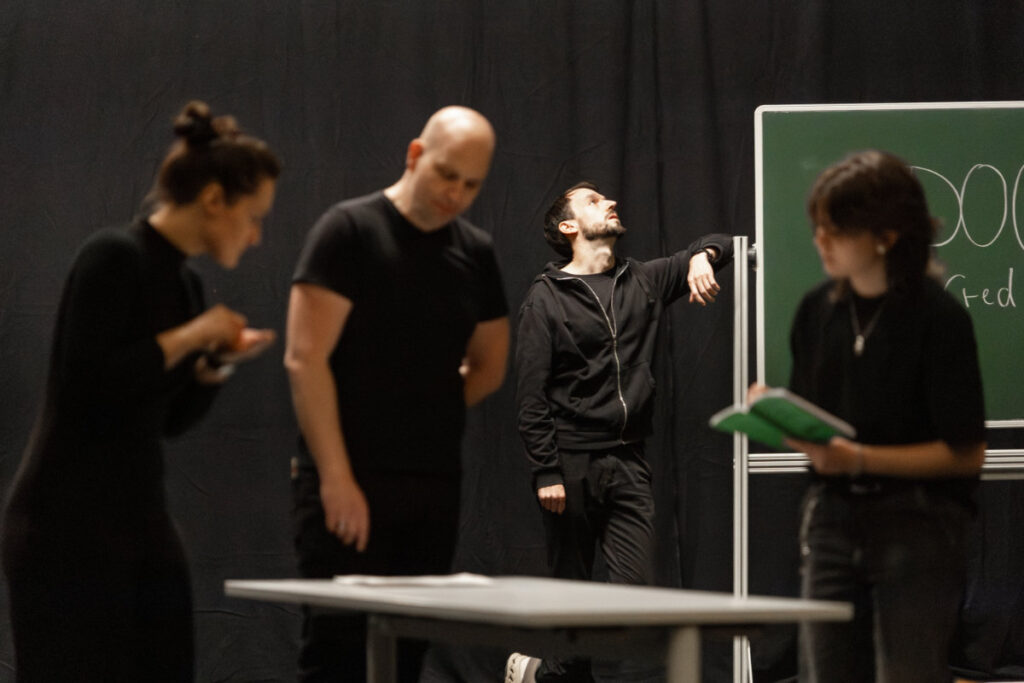
Stefan The synergy of these different Hydes creates an impression beyond the sum of its parts. I, too, didn’t expect it to be such a powerful device.
Miriam I feared that it could confuse the audience, but seeing this played out on stage reassured me that the multiple casting really reinforces the idea of unstable identities. It becomes impossible to associate an actor’s face with a fixed and coherent character. Of course, this only works with our incredibly creative actors, who have a lot of fun building these characters, and with our costume department working on effective visual markers, making the language of the play clear to the audience.
Which aspects of the play turned out to be particularly challenging?
Miriam What makes the play so captivating and intriguing is also the most challenging part staging it: that it is so dynamic and so fast-paced. The fast scene changes force us to become more creative in the ways we stage and narrate these changes without dropping the flow of action.
The unsettling idea that you can never see into someone’s mind has never left me.
Miriam Barbi
Like Stevenson’s novel, the adaptation is set in late 19th-century London. Did you consider transposing it into a more contemporary context? What are the advantages of keeping it in this era even in a production today?
Miriam Late 19th-century London, and this is probably partly due to the success of Stevenson’s novella and other Gothic novels of the time, evokes many of the themes central to the play. I am thinking of the era’s strict moral codes, the blurring of boundaries between science and pseudoscience, the society’s obsession with reputation, the rigid separation of public and private life, and therefore the Victorian tendency towards hypocrisy. Many of those aspects remain relevant today, and good arguments can be made to transport the play into more contemporary contexts. Consider how the public sphere is shaped by digital avatars and perfectly curated versions of ourselves that we think we can control.
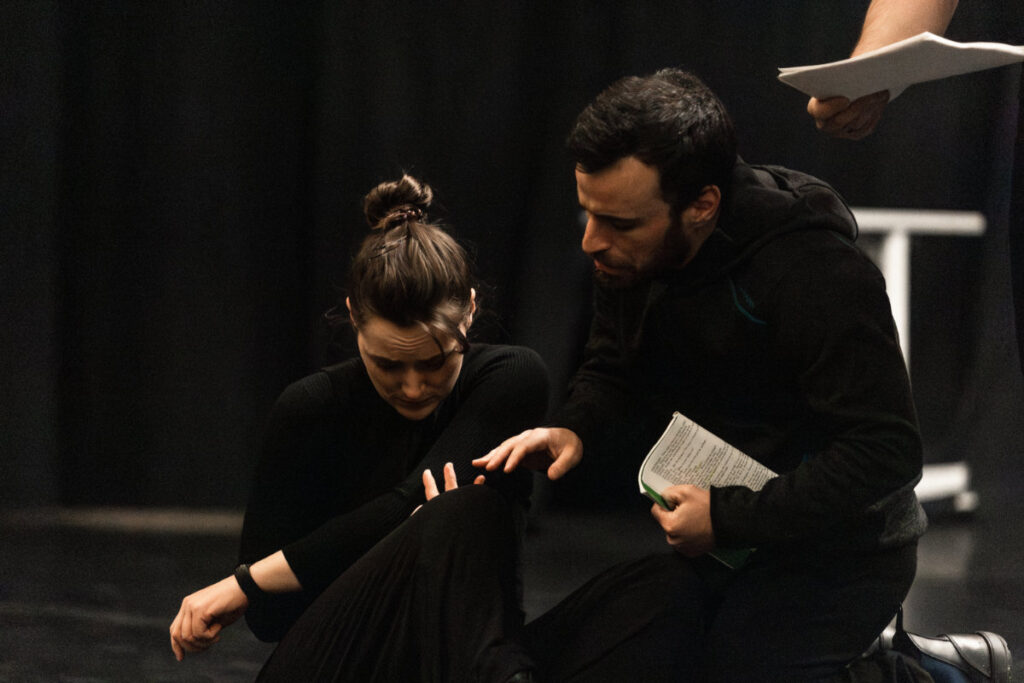
Stefan The story is very much rooted in Victorian Britain: the characters, how they see the world and think about it. Think about the onset of natural sciences, incipient forensics, the very specific class structure. If you were to translate all that into the modern era, much of it would be lost.
Miriam The main reason why I kept the Victorian setting is the intertextual dynamic that Hatcher establishes between his interpretation, the original novella, and the pop cultural reception of the story. Throughout the decades, it has gradually shifted to the idea of Jekyll and Hyde as a battle between a hero and monster with one being wholly good and one wholly evil—though that interpretation is not at all in line with Stevenson’s novella. Hatcher deconstructs that dualism and makes clear that Jekyll has never been the hero of the story. He does so by returning to the source material, so maintaining the original setting felt important to ground the audience‘s expectations, which we can then turn upside down.
The play is perfectly understandable to anybody who hasn’t read the novel.
Vera Kittner
Vera The era adds just the right atmosphere.
Stefan Yes, there is a certain style implied in Jekyll and Hyde. Playing with this specific aesthetic is just part of the play and lots of the fun.
The phrase ‘Jekyll and Hyde’ has entered common parlance as a shorthand for split identities and moral good-vsevil duality. Are you saying this version actively subverts this idea?
Vera That’s a simplified phrase and the play helps to get a deeper understanding of the relationship between Jekyll and Hyde.
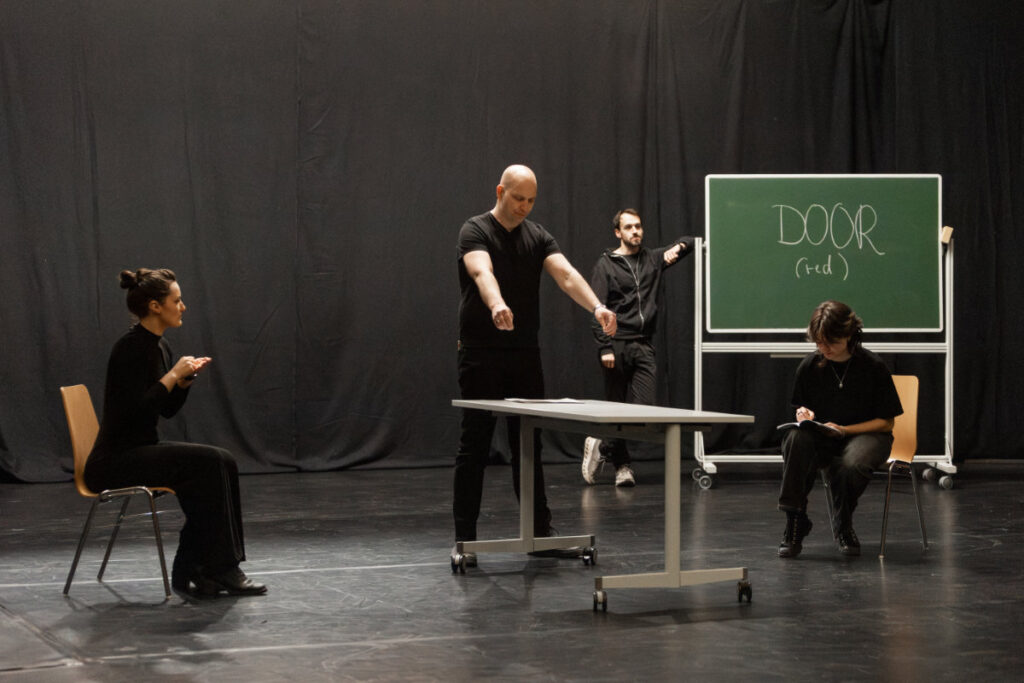
Stefan It is definitely in the subverting business. There is the obvious aspect of Hyde being played by different actors, implying that things just aren’t so easy and maybe there is a little bit of Hyde in each one of us. If you look at the characters more closely you also come to realize that Jekyll is not the nicest guy around. At some point you might even feel that Hyde is “the good guy.” But then you look again and go, “Oh no, Jekyll also had his good traits,” and so on. It’s nuanced in a way that doesn’t make it easy for the audience.
Miriam Yes. And to add to that, I think Hatcher doesn’t present a notion of evil but rather the notion of impulse, which can be for the worse or maybe even for the better.
The synergy of these different Hydes creates an impression beyond the sum of its parts.
Stefan Wallner
This version includes the character Elizabeth, the older sister of a young girl attacked by Hyde. How does the addition of Elizabeth alter the story?
Vera Elizabeth is absolutely necessary. She represents a link between Jekyll and Hyde. While she seems to have genuine romantic interests in Hyde, Jekyll tries to protect her from him—in a very eerie way.
Stefan Elizabeth is a much-needed female character in a play where every other person is a man. She is also from a relatively poor background which contrasts with the ensemble of posh doctors and solicitors, connecting her with Hyde as the other odd one out. She has an interesting dynamic going on with Hyde, but she is also an independent fully-rounded, three-dimensional character. Plus, she is played by Clara Kasten without whom I could not imagine this production.
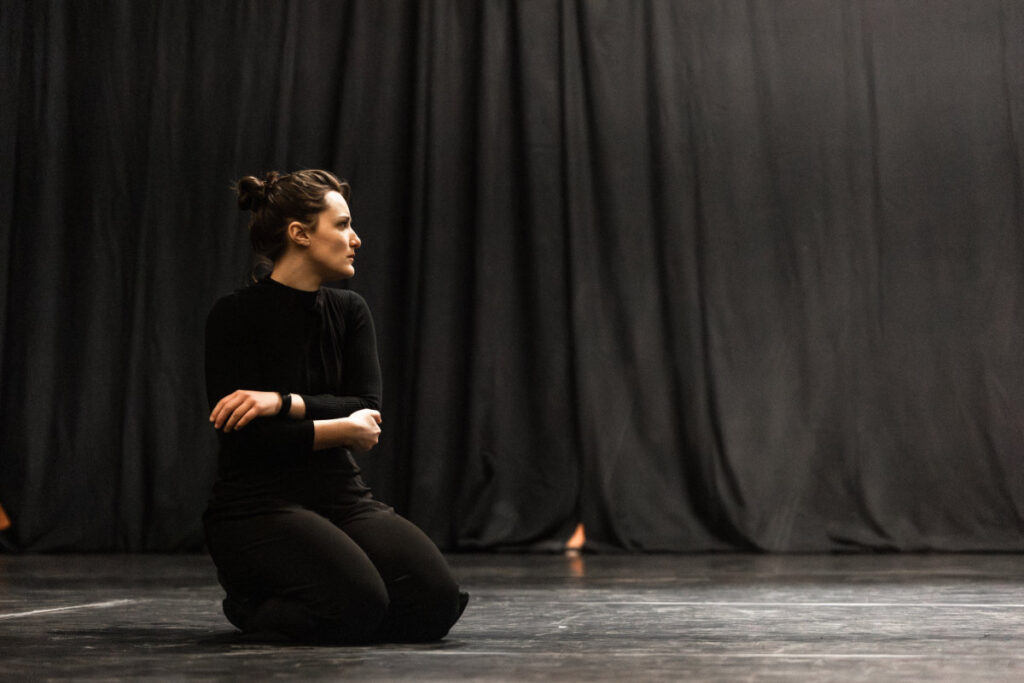
Miriam In many movie adaptations, beginning in the early 1930s and 1940s, or the stage musical, Hyde is often depicted pursuing a woman, assaulting, and ultimately killing her. Hatcher adds a twist here as well, presenting Hyde as capable of love and sincere human connection. On a different level, it is through Elizabeth, that the play engages with a complex notion of complicity, showing how people might go to great lengths justifying the actions of people they love. People who love us might still be capable of hurting others—how do we deal with that moral dilemma?
Tobias Reinert is composing an original score for this production. How did this collaboration come about and what role does the music play in this staging?
Miriam Tobias is a close friend of mine with many years of experience in music production and we have collaborated in the past. I am a big fan of his work and knew that the sound I had in mind would play to his strengths. The music and soundscape add a driving, modern rhythm and pulse to the show, sometimes crafting the thriller atmosphere, raising suspense, sometimes presenting music more prominently.
Hatcher doesn’t present a notion of evil, but rather the notion of impulse.
Miriam Barbi
We use a classical piece of music as the main theme for the Hydes in the play: Saint-Saëns’ Danse Macabre. It’s a musical depiction of a medieval legend: Once a year at midnight, Death calls the dead to dance with him while he plays his fiddle. Death is the great equalizer that comes for everyone regardless of their social status or power—the things that Jekyll so desperately tries to maintain. At the same time, concepts more associated with Hyde—the loss of control, succumbing to impulse—are often expressed through dance. While our Hydes are not actually dancing, a lot of the movement we have created for the show is dance-like.
Vera The music adds just the right dose of suspense. I also appreciate that there is another creative mind offering an individual note, which expands the experience at large.
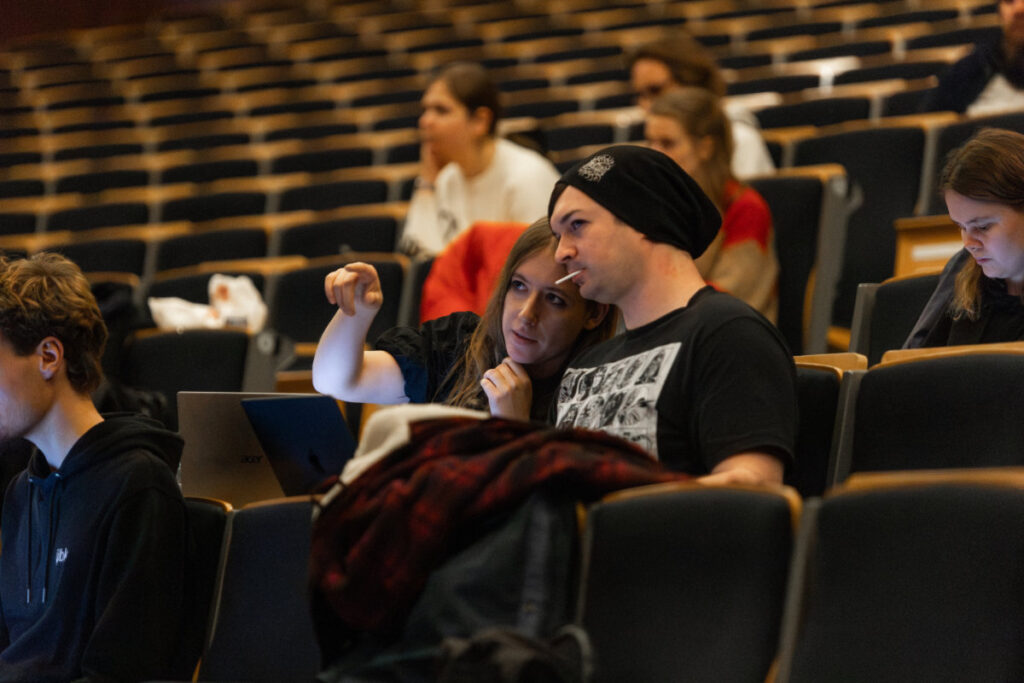
During the planning stages of this production, we were surprised to learn how unfamiliar the original tale is to younger audiences. How does this adaptation differ from the novella, and will those who do not know the source material still be able to enjoy the show?
Miriam This is such an interesting question, and I am already so thrilled to talk about this after the show to those people who have read the novella and to those who haven’t. Even within the cast and crew some of us are very familiar with the novella, some are completely new to the story and others began with a vague idea about what a Jekyll-and- Hyde persona might mean. While I am certain that people who don’t know the novella can organically follow the show, I also think that Hatcher has written the story with an audience in mind that is at least vaguely familiar with the plot. A lot of the play’s complexity draws from that, for example, in the ways that Hatcher subverts expectations or adds plot twists in this psychological thriller kind of way.
Stefan Fear not. Before I started working on this project, my understanding of the story had been exceptionally shallow. It might help to have an idea of the gist of the story, but it’s definitely not required to understand the show.
Vera I haven’t read the novel either, just the play. The play is perfectly understandable to anybody who hasn’t read the novel.
While Miriam has joined the UPs a year ago, supporting the previous two productions, Vera and Stefan have joined the UPs for this production. How did you hear about the UPs and how has the experience been for you so far?
Vera I am currently a student at the Institute of English and American Studies. After hearing about which play was going to be produced this semester, two friends and I went to the auditions in October. I was interested in stage management and directing assistance, which is what I am doing now. So far, I have greatly enjoyed working in such a great team. Like everyone else, I am so impressed by the work the actors, the costume and props people, that everyone is doing.
People who love us might still be capable of hurting others—how do we deal with that moral dilemma?
Miriam Barbi
Stefan I recently moved to Hamburg and looked for some side project unrelated to my studies. At the Markt der Möglichkeiten, organized by the PIASTA, I met you all. Miriam told me she was looking for a directing assistant. It sounded fun, the people seemed nice, so I joined. And it has been great so far! I have worked in many projects with people from different backgrounds, and the UPs are just really nice and lovely. I keep learning about more things that people are doing—like this magazine—about all the resources available and so on. It is a fascinatingly big universe.
Thank you all for this insightful conversation!
Photo (c) Sarah Naumann
Schreibe einen Kommentar