

Or: How to Install Arbitrary Conventions as Natural Facts
By Stefan Wallner
UTTERSON. Yes, but how do you get to the mind without
going to the brain?
JEKYLL. You find an open door.
UTTERSON. Thank you for clearing that up, Jekyll.
That answered every possible question I had.
Dr. Jekyll’s project of isolating and destroying the bad in man is a lot of things: highly unethical, megalomaniacal, and, most importantly, doomed from the start. In this text I will take a look at Jekyll’s assumptions about how the world functions on a conceptual level, showing how he not only fails in his ambitions but never stands a chance of succeeding. But before we start, let’s note what we know about how Dr. Jekyll views the world:
- He is a materialist; he specifically mentions that he does not believe in a soul or a god. In his view, all existence boils down to physics. There is no need for a higher reality.
- He identifies the bad with the instinctual. In Jekyll’s view the bad we can see “in the murderer’s eyes” is a relict of an instinctual past, tamed by civilisation but still there—a mistake he intends to correct.
- He is completely sure of his abilities. Jekyll really does believe that he has found the way leading to a world without evil.
We can see that Jekyll’s ethics are, in principle, Kantian. The good action is the reasonable action. In Kant’s view, we can identify the good action through reasonable thinking, leading us to the categorical imperative. But that’s not the route Jekyll takes—he actually can’t because he would need to assume a transcendent self as Kant does.
Transhumanist „Solutions“ for Philosophical Problems
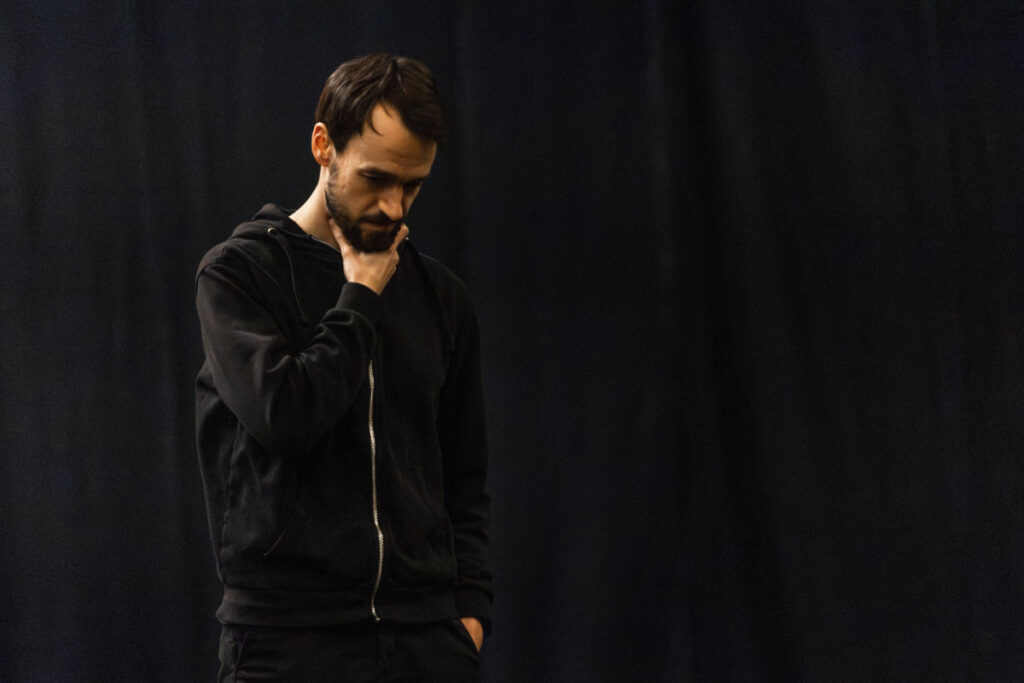
Jekyll concocts a potion, trying to isolate and annihilate the immoral part of himself, creating Mr. Hyde in the process. What Jekyll does is essentially a transhumanist project. Transhumanism, as the enhancement of humanity through technological means, lends itself nicely to Jekyll’s association between the civilized and the good. Yet there is a problem now: Mr. Hyde is not evil in the classical sense; he is just bothered by society’s morality. If Jekyll were to be correct, Hyde would be evil incarnate, constantly thinking about morality and actively deciding to make unethical choices. However, quite the contrary happens: Hyde is completely amoral, meaning that he doesn’t think about morality at all. In a Nietzschean way, Hyde seems to act beyond good and evil. And Jekyll himself? Well, he should be good through and through, but I doubt anyone would say that Jekyll is an angel incarnate—he still is just as morally nuanced and complicated as ever. So what went wrong?
If Jekyll did not extract morality, what’d he extract?
As noted before, transhumanism aims for enhancement through technology in this case, being a good and moral person. We can stop and dwell for a moment on excited, unscientific discussions about a potential “killer-gene” or an “evil part of the brain” and a “cure” for both conditions. However, precisely when taking on this view, two things happen—let us suppose for the sake of argument that Jekyll really were an angel and Hyde, a devil.
- If all of your choices are ethical via your (enhanced) nature, they are not choices anymore. They become part of your nature; you have to make them. An ethical action that is not an active choice is not an ethical action. That’s like saying a water dispenser acts ethically because it gives water to everyone who is thirsty, or that sleeping is an ethically evaluable concept.
- Now morality has become a question of pathology. You only act immorally because of biology, but if we cannot differentiate between “evil” and “sick,” it doesn’t make sense to talk about an “evil” or “good” deed, only about a “right” or “wrong” biology in a technical sense.
So, by trying to resolve ethical issues via biology, Jekyll does not destroy the bad but the potential for morality in the first place—which is having a choice. With this in mind, it is quite lucky that his project failed. Nevertheless, it seems that something really has happened, but what did Jekyll actually do?
So what did actually happen?
Jekyll is a proponent of a movement called szientism, which basically boils down to the belief that every question can be answered by means of the natural sciences. This hardcore materialist perspective has a history of having troubles with ethics (or having troubling ethics, as exemplified by the infamous work of de Sade who devoted substantial parts of his books arguing against any sort of god). Jekyll’s connection to materialist science clashes with the moral idea of having a real choice. In his transhumanist project, he loses the capacity to choose.
Jekyll does not conclude that morality, in the way he seeks, is completely outside the scope of scientific discussion—meaning objective, true morality. The Kantian categorical imperative needs a free will that recognizes morality, and Nietzsche’s Übermensch needs the will to power—but there is no freedom in Jekyll’s project. The concept of free will is, to this day, heavily debated in the natural sciences. Yet, if Jekyll did not extract morality, what did he then extract?
The whole premise of the story is Freudian. Let’s just think about Jekyll’s idea of the two streams in the mind or his differentiation of the civilized or uncivilized. In a simplified version of Freud’s ideas, the personality is structured in three parts:
- Id – the part in us composed of naturalistic and primitive drives;
- Superego – the part in us that represents social standards, taboos, and how we should behave in general;
- Ego – the conscious part in us that mediates between the Id and the Superego.
Sound familiar? Hyde does not have a Superego; he just does what he pleases. For our purposes, that means he is unbothered by what society expects of him, even though he can understand its norms. In this way, Jekyll has performed quite the scientific feat.
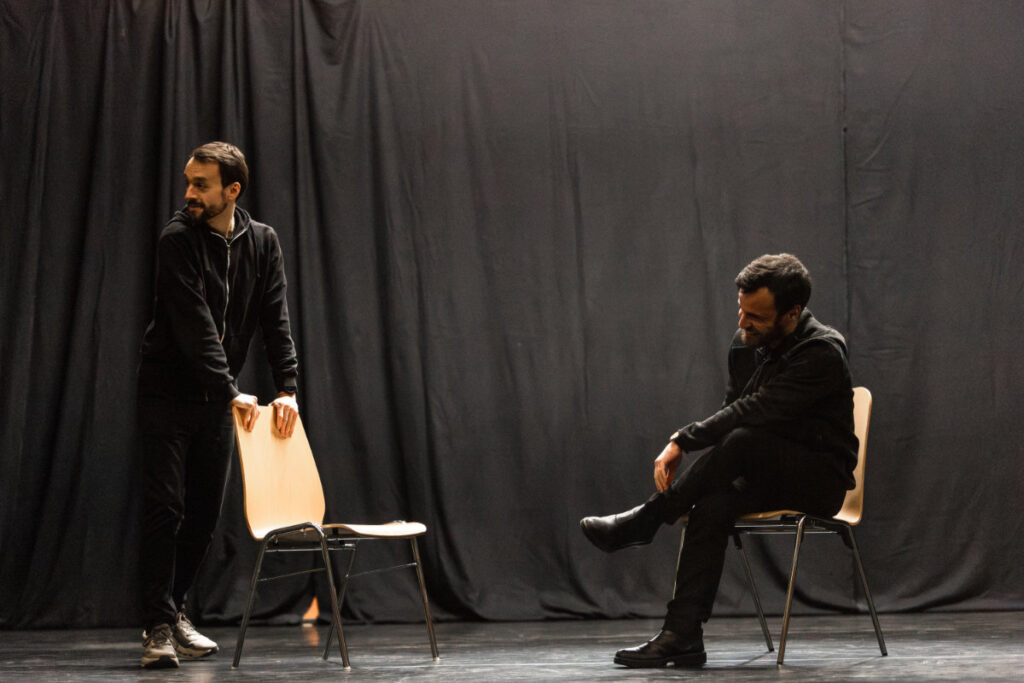
So, if Hyde is someone without a Superego, who is Jekyll then? Well, Jekyll is someone who has no idea how complex Freud is. In Jekyll’s view, Hyde not adhering to the social concept of morality, equals Hyde being pure evil. Now we come full circle. Jekyll does not like to think about ethics or metaphysics or god because those questions are hard and complicated and outside of his expertise as a doctor–and his reaction to this is to dismiss all of it as unimportant.
Jekyll is certain that he has the right idea, and yet he just ends up reproducing social conventions and standards, but now with a “scientific basis.” Because if you expect Hyde to act evil (because that was your idea from the start), and you see him acting evil (because you mix up social conventions and true ethics) you now have a biological justification for your social standards and your unquestioned ethical ideals. And now the sleight of hand is complete, and we have installed an arbitrary system of conventions as a piece of nature. And all we did was dismiss everything outside of the natural sciences as unimportant.
Photos (c) Sarah Naumann
Schreibe einen Kommentar