
By Lukas Argus & Raphael Michaelis (Gymnasium Altona)
The stage adaptation of Dr Jekyll and Mr Hyde presents Robert Louis Stevenson’s story in a tense and thoughtful way, using simple staging and strong acting to focus on the main themes of the novel. Even though the production is visually minimal, it creates a powerful atmosphere and keeps the audience engaged from beginning to end.
One of the most striking features of the play is that it is performed by only seven actors, who take on all the roles in the story. Dr Jekyll is played by a single actor throughout the entire performance, which helps to show his stable public identity, while Mr Hyde is portrayed by several different actors at different moments in the play. This choice makes Hyde feel less like one individual character and more like a dark force that can appear anywhere and at any time, which strongly supports the idea that evil is not fixed but exists within everyone.
The theme of the double nature of human beings is central to the play and is clearly shown through both the acting and the staging. The transformation scenes do not rely on special effects but instead use lighting, sound, and changes in movement and posture to show Jekyll’s loss of control. Because of this, the transformations feel realistic and disturbing, as the audience can see how easily Jekyll’s darker side takes over.
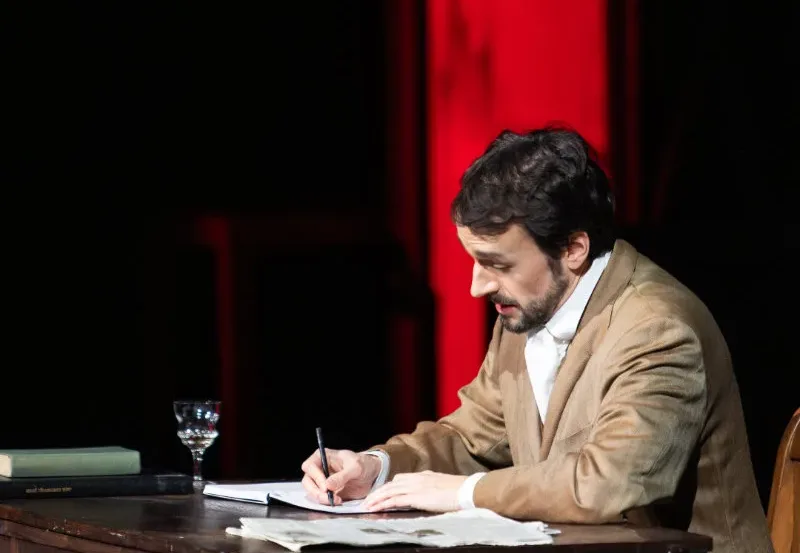
The performance of the actor playing Dr Jekyll is convincing and emotional, as he successfully shows the difference between Jekyll’s calm, polite behaviour and the fear and panic he experiences as Hyde becomes stronger. Each actor playing Mr Hyde brings a slightly different energy to the role, but all of them present Hyde as aggressive, restless, and threatening, which makes the character feel unpredictable and unsettling rather than unreal or supernatural.
The set design is extremely simple, with almost no props used on stage, apart from a door, a few chairs, a table, and some small objects. This minimal approach works well, as it keeps the focus on the actors and the story while also creating a sense of emptiness and tension. The use of darkness and shadow helps to build a mysterious atmosphere and reflects the themes of secrecy and repression that run throughout the play.
The pacing of the production is well balanced, as the influence of Hyde grows slowly over time, while Dr Jekyll’s control and confidence gradually disappear. By the final scenes, the ending feels tragic but unavoidable, leaving the audience uncomfortable and thoughtful rather than offering a clear solution or moral message.
Overall, this stage adaptation of Dr Jekyll and Mr Hyde is effective and memorable, using a small cast, simple staging, and strong performances to explore ideas of identity, morality, and inner conflict. The play proves that a powerful theatre experience does not need large sets or many actors, but instead relies on clear ideas and committed performances.
Photos by Sarah Naumann
Schreibe einen Kommentar